
Aligning Teams Around What Matters
A collection of articles and reflections on how organisations actually work — and how technology leaders can align teams around real user needs and the flow of value.
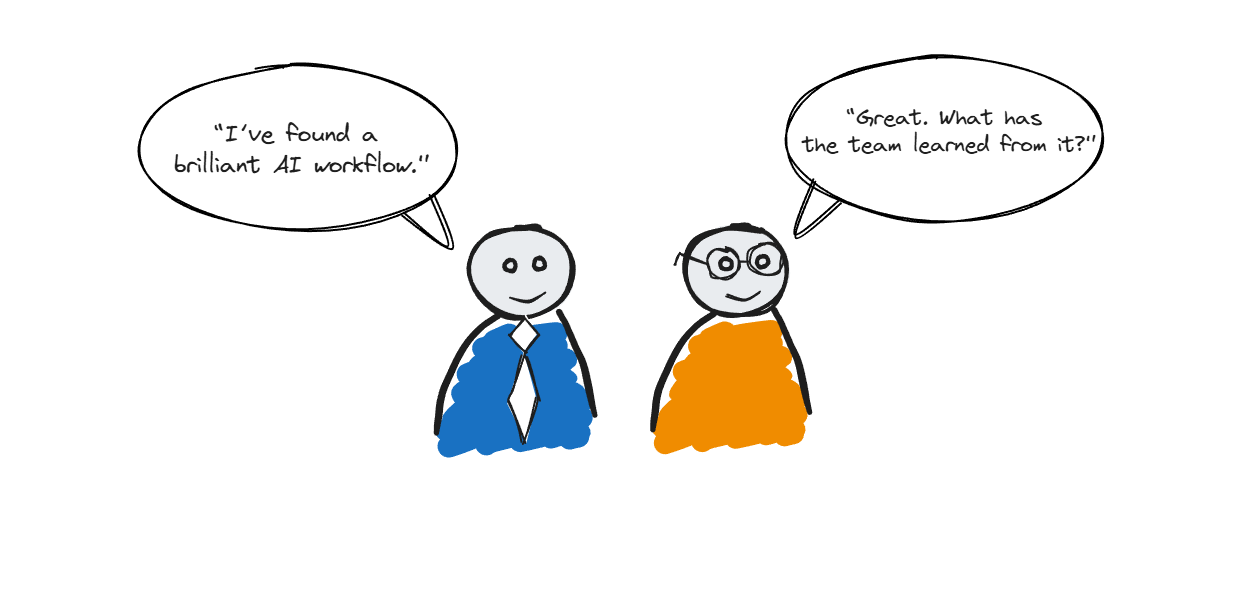
When AI Learning Stays Personal
One risk with AI adoption is that the learning stays personal: a clever workflow here, a useful prompt there, a few people getting much faster at parts of their work. It's useful, but not enough.
If the learning stays with individuals, the organisation has not really changed. It has just created a few pockets of local productivity.
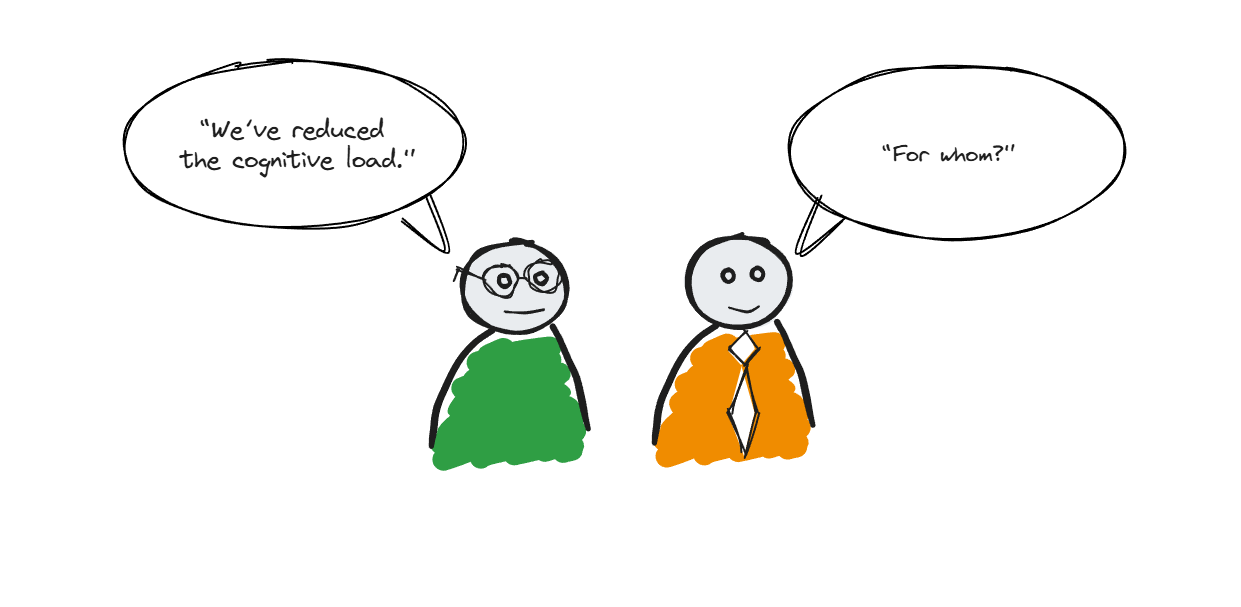
Designing for AI Means Designing for Cognitive Load
In my previous article, I wrote about the risk of mistaking AI activity for progress, and asked where the saved time actually goes.
There is a related question that I think matters just as much: where does the cognitive load go? In many cases, AI clearly reduces effort in a task. The question is where the effort moves when that task becomes easier.
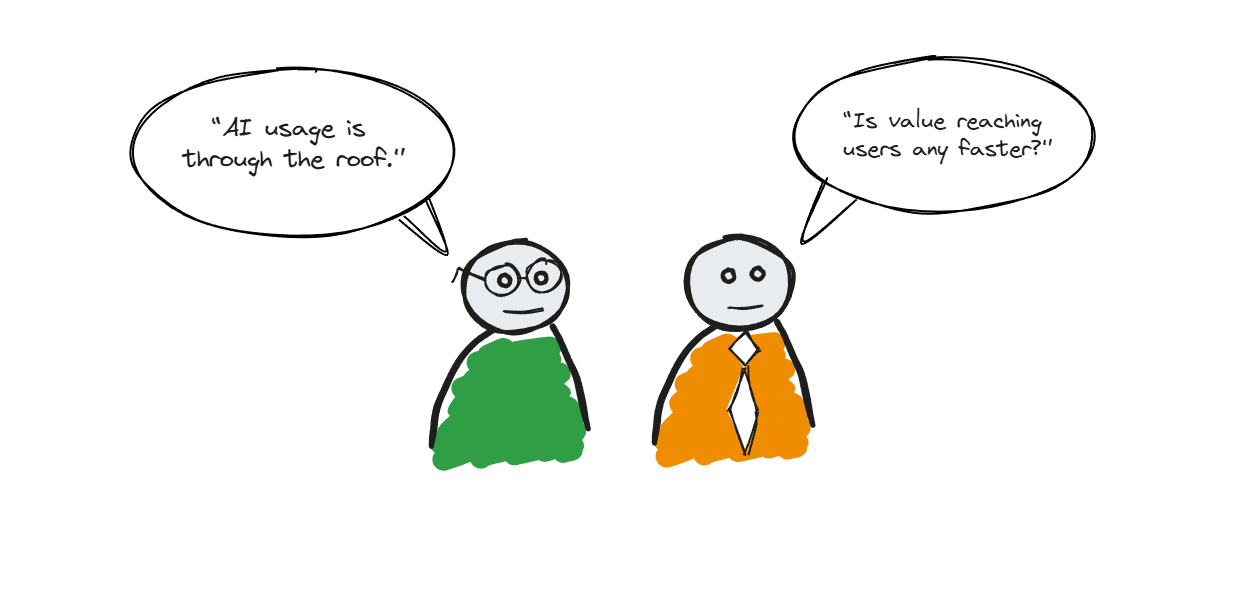
The Productivity Trap: When AI Activity gets Mistaken for Progress
Some organisations are using AI token consumption as a measure of progress. The intent is understandable: leaders want people to experiment and avoid a situation in which expensive AI tools are available but go largely unused. They also want visible evidence that the organisation is moving.
But AI usage is not the same as improvement, activity is not the same as progress, and productivity is not the same as flow.
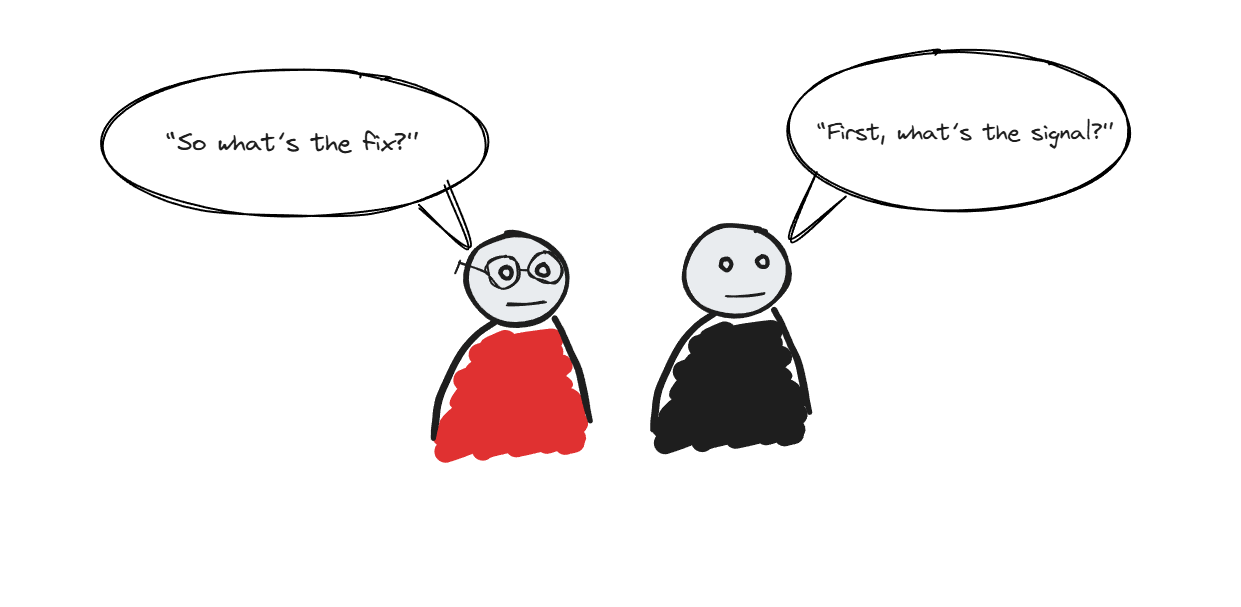
Friction is Feedback
When organisational friction keeps repeating, try not to jump straight to a solution. First, ask what kind of signal it might be.
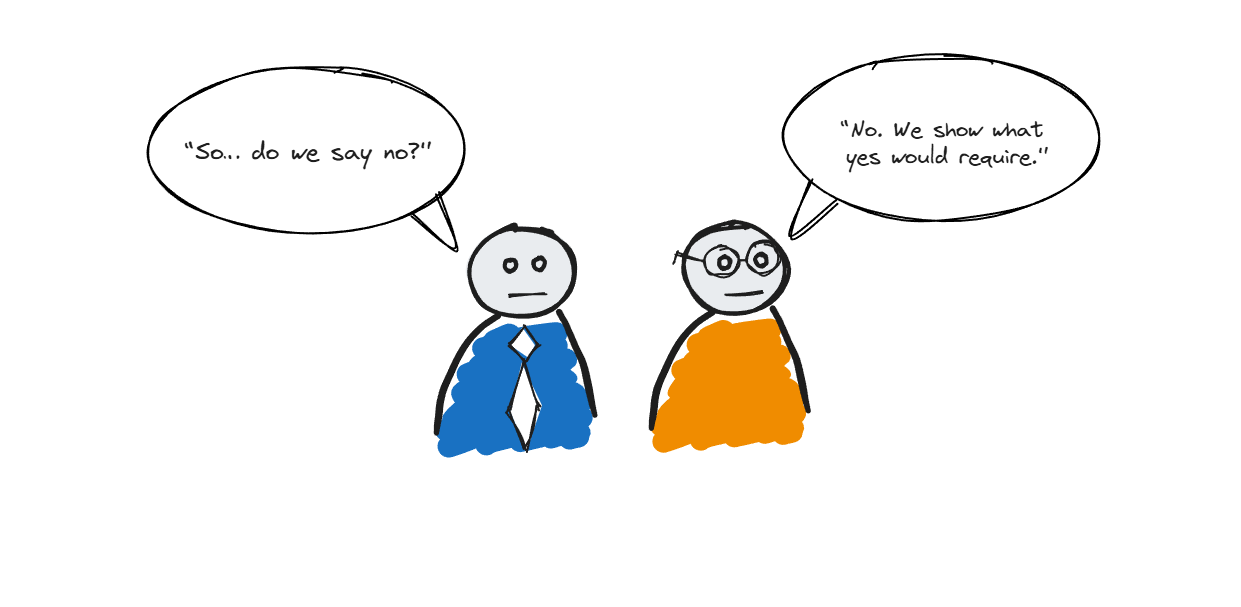
Stop Pushing Back. Start Saying “We can if…”
Organisations have their own version of chocolate with every meal. A stakeholder asks for a feature, an integration, an exception or a workaround. The request may be entirely understandable and the pressure behind it very real. The stakeholder may be trying to respond to a customer, hit a target, satisfy a leader or make sense of something that currently feels unclear or stuck.
But that does not mean the requested response is good for the wider system.
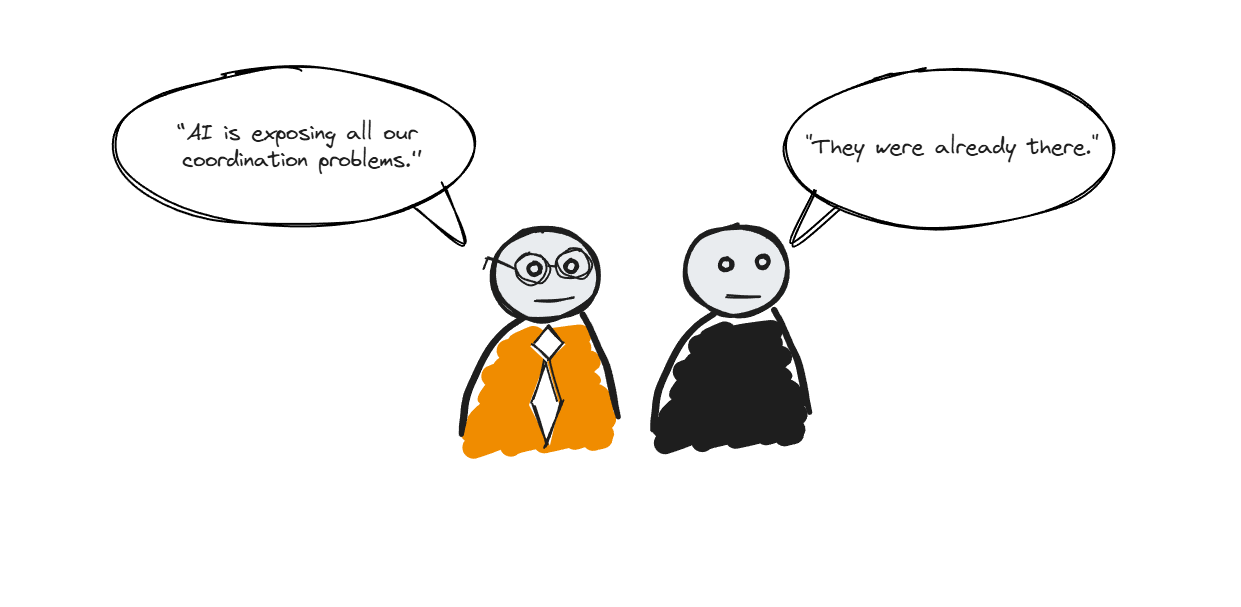
AI Agents Are Rediscovering Organisational Design Problems
Many organisations are approaching AI adoption as a capability problem, but the harder challenge may be organisational coherence: designing systems of work where humans and AI can coordinate effectively without overwhelming each other with complexity.
The organisations that navigate this well are likely to be those that understand how work flows, where decisions belong, what outcomes matter, which interactions are essential, and where coordination should end. Because adding AI agents to a fragmented system may simply increase activity faster than it improves effectiveness.
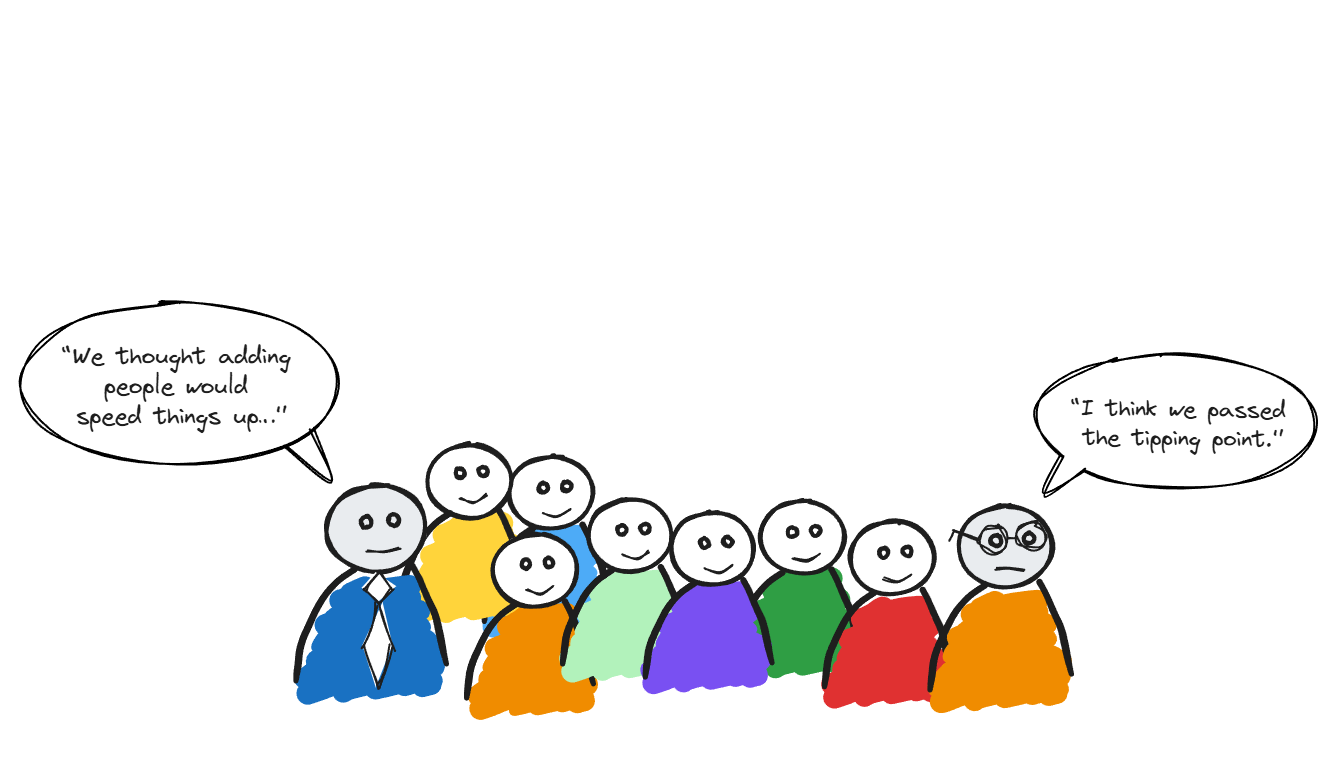
Why large teams slow down: the tipping point where size starts to hurt
If work is behind schedule, surely adding more people should help. But research highlights something many leaders still underestimate: people do not arrive as pure productive capacity, they also bring co-ordination cost. New joiners need onboarding, existing team members must explain context, work must be repartitioned, decisions need more voices, dependencies increase, communication overhead grows. Sometimes the additional capacity helps, often the extra complexity arrives faster than the extra output.
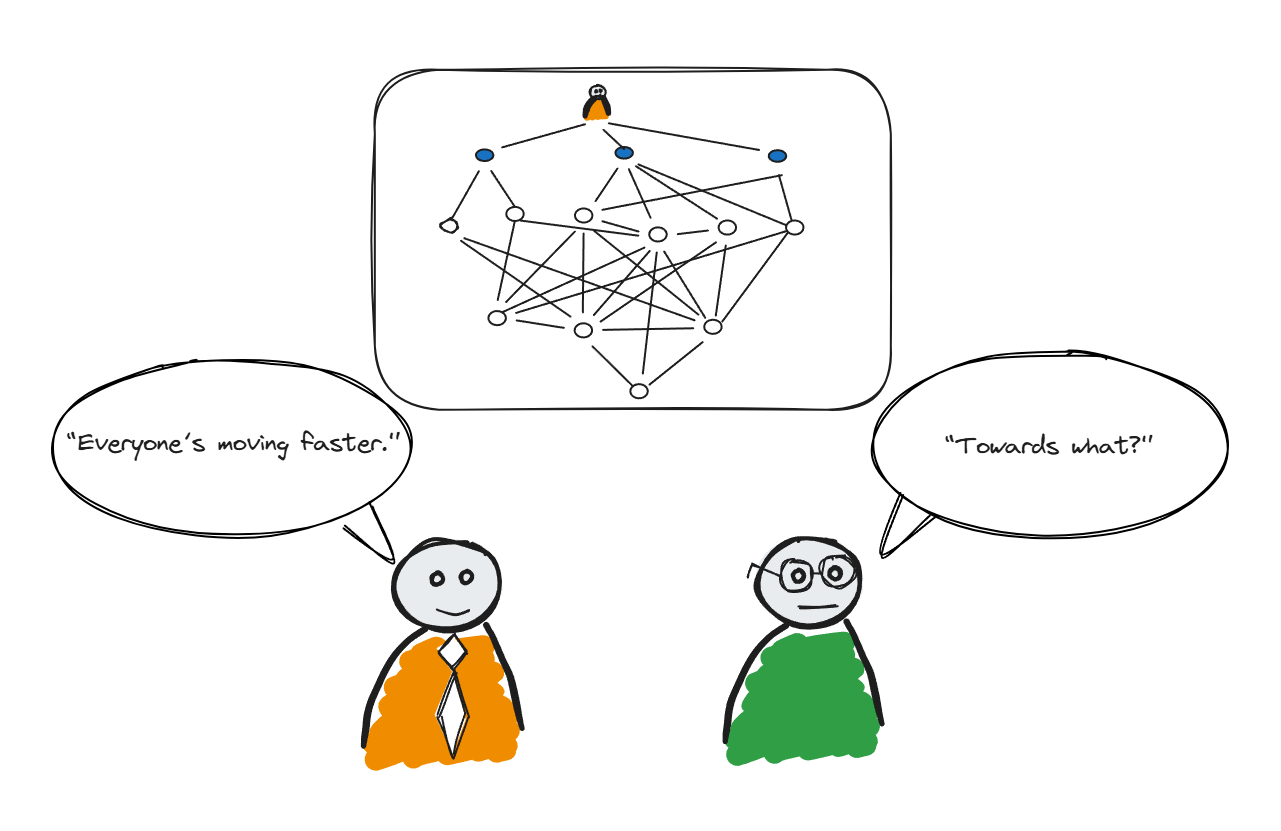
Knowing What Matters: Why Adaptive Organisations Stay Close to Customer Value
If teams are to act coherently in a changing environment, they need more than autonomy and coordination. They need shared clarity about what creates value, whose needs matter most, and which signals deserve a response, and a deliberate system design that enables them to act on that clarity.
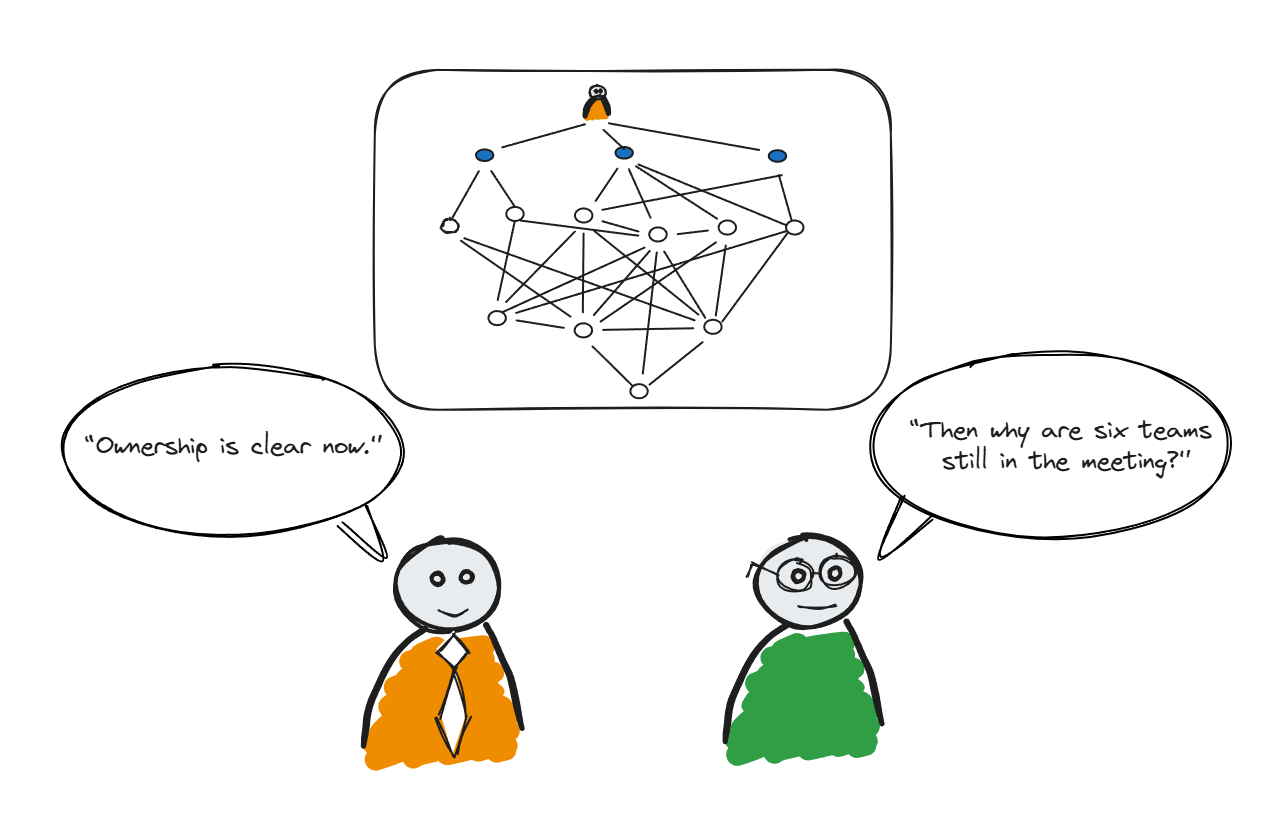
Why Coordination is Where Organisational Complexity Really Hides
An Octopus is not effective simply because each arm can act independently. It is effective because those arms remain connected in a way that allows the whole organism to respond fluidly and without delay. The same is true of organisations. An adaptive organisation is not simply one where teams can operate independently. It is one where teams can come together effectively when they need to, separate cleanly when they do not, and do both without unnecessary friction.
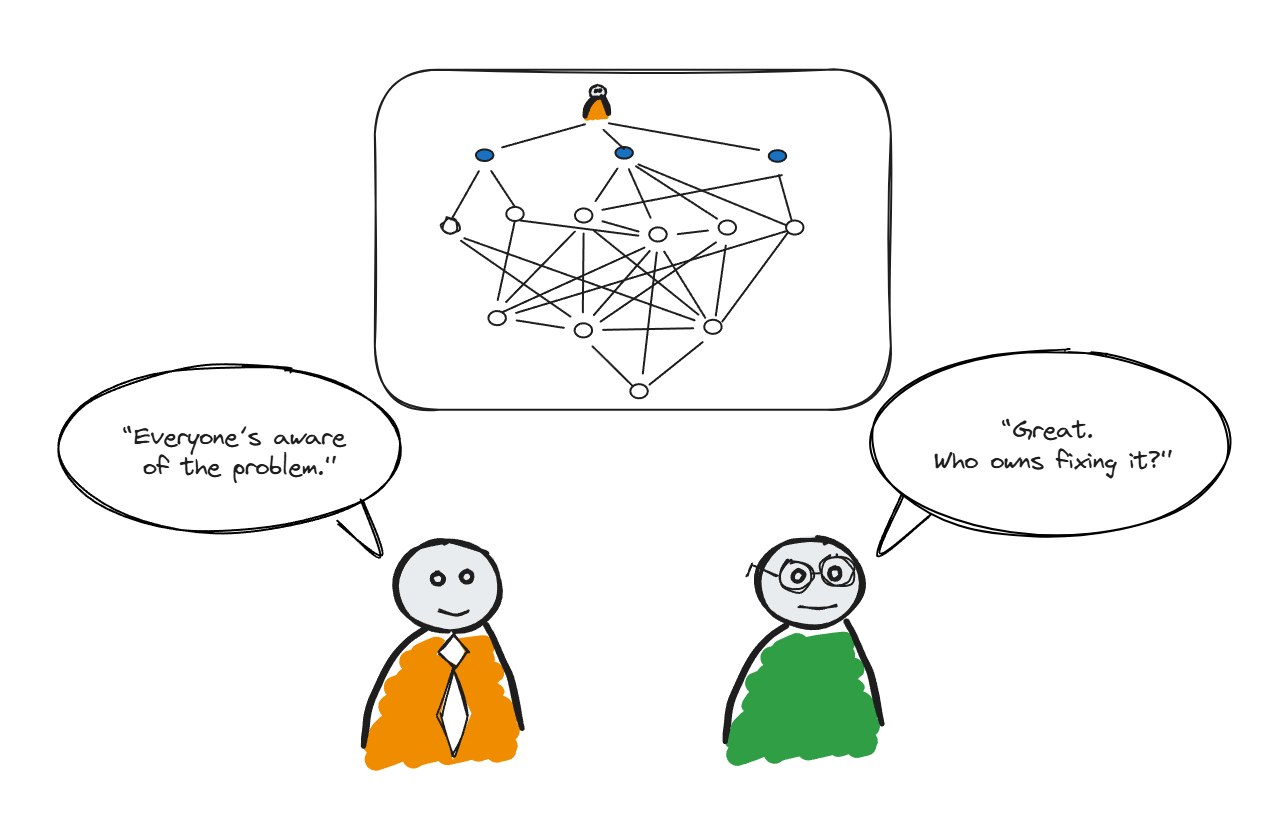
Why Unclear Ownership Slows Adaptive Organisations
The Octopus Organisation offers a metaphor for distributed sensing and action. An Octopus arm is responsive because it is part of a system with clear roles, relationships and responsibilities that enable action to happen locally while remaining coherent overall. Organisations are no different. If you want adaptability, start by asking whether your teams know when to act, when to coordinate, and when to defer. Because ownership clarity is one of the conditions that makes adaptability possible.
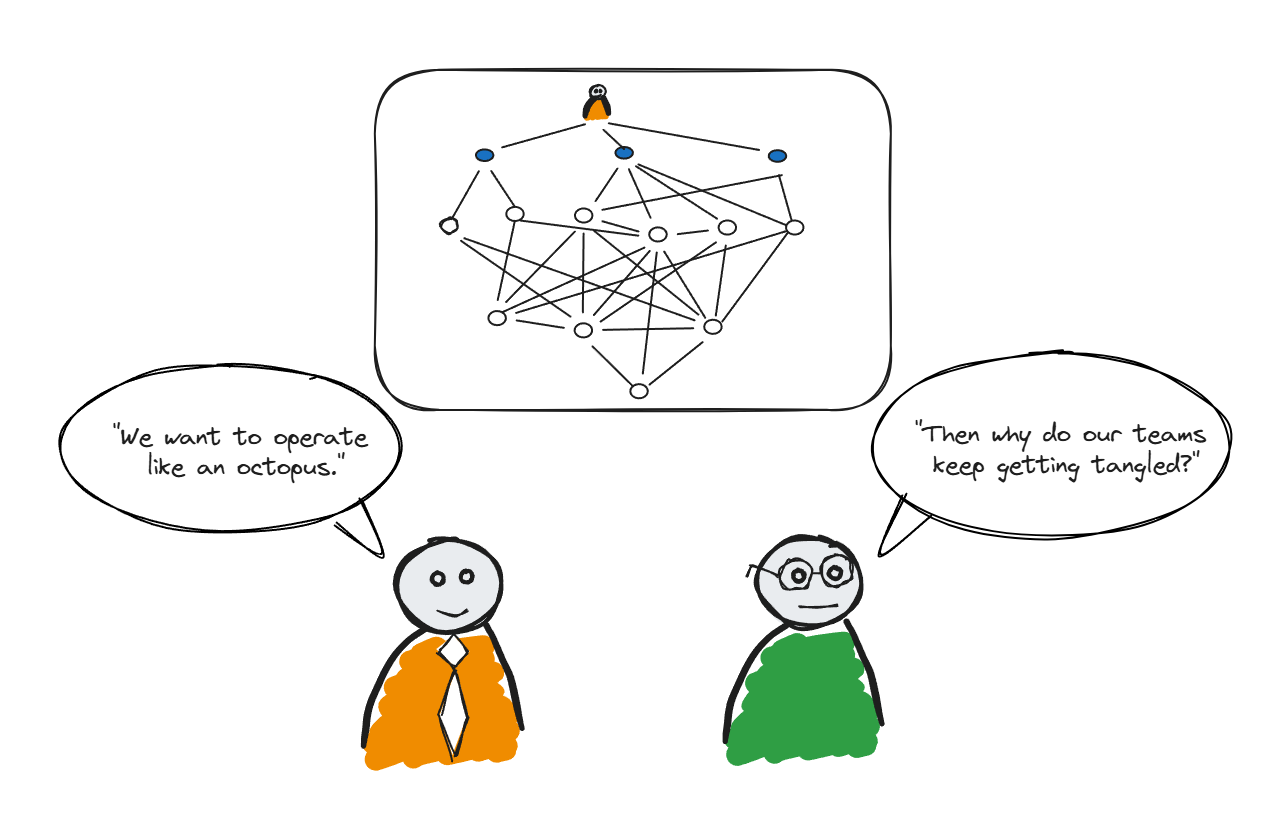
The Octopus Organisation: What it Really Takes to be Adaptive
Becoming more adaptive is often framed as a question of speed, but speed alone is not the goal. The goal is to respond in a way that is both timely and coherent, and that requires more than pushing decisions to the edge. It requires clarity about what matters, and the deliberate design of a system that allows teams to act on that clarity.
Responsibility and authority are not the same thing
Responsibility and authority are not the same thing. A team may be accountable for an outcome, yet lack the authority to change the conditions required to achieve it. They are asked to improve speed, but another group controls the pipeline. They are measured on customer experience, but priorities are set elsewhere. They are expected to reduce incidents, but key technical decisions sit outside their remit. So responsibility sits in one place, decision rights sit in another.
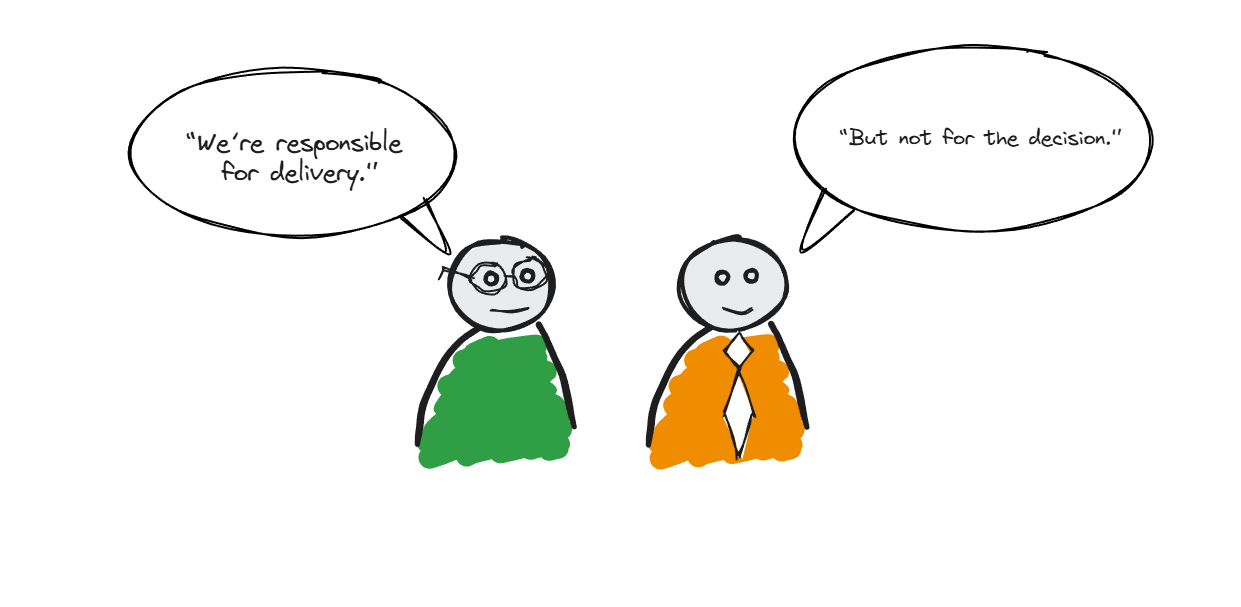
Why nobody owns the problem
The bystander effect reminds us that people often fail to act not because they do not care, but because they are in a situation where responsibility is unclear. And the same is true inside organisations. When ownership is clear and visible, people step forward. When ownership is blurred, people step back.
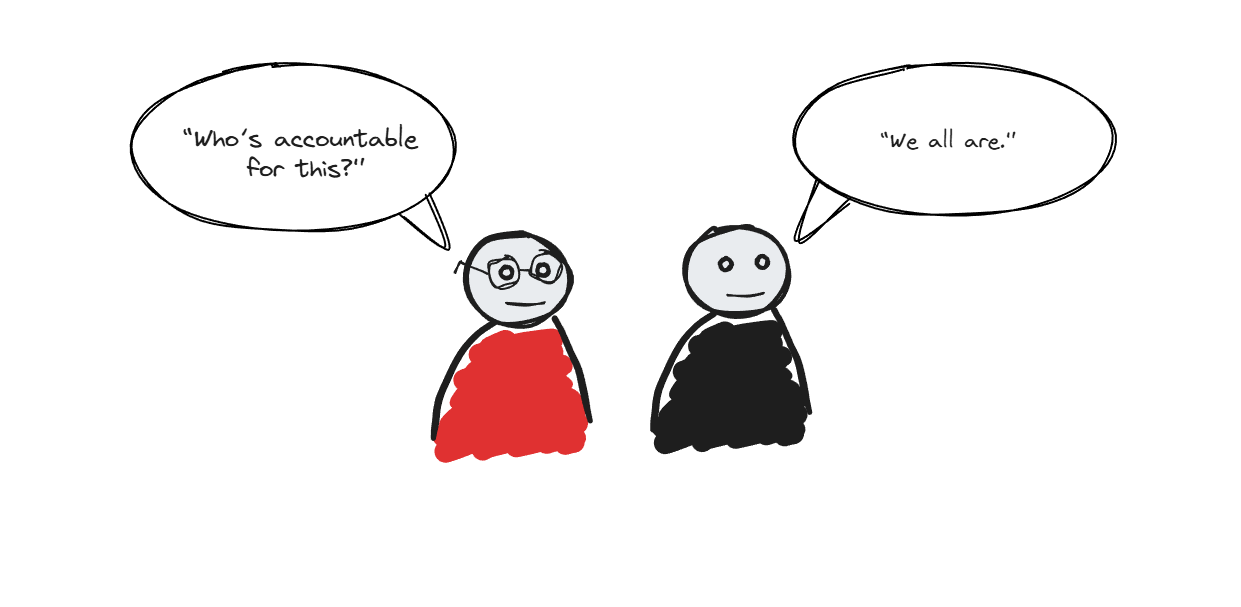
When ownership feels clear until it matters
The real test of ownership isn’t clarity in documentation; it’s clarity at the moment of interaction. When two teams disagree about priority, or a cross-cutting decision has implications for several domains, or when risk appears and no one is certain who carries it. That’s where ambiguity reveals itself.
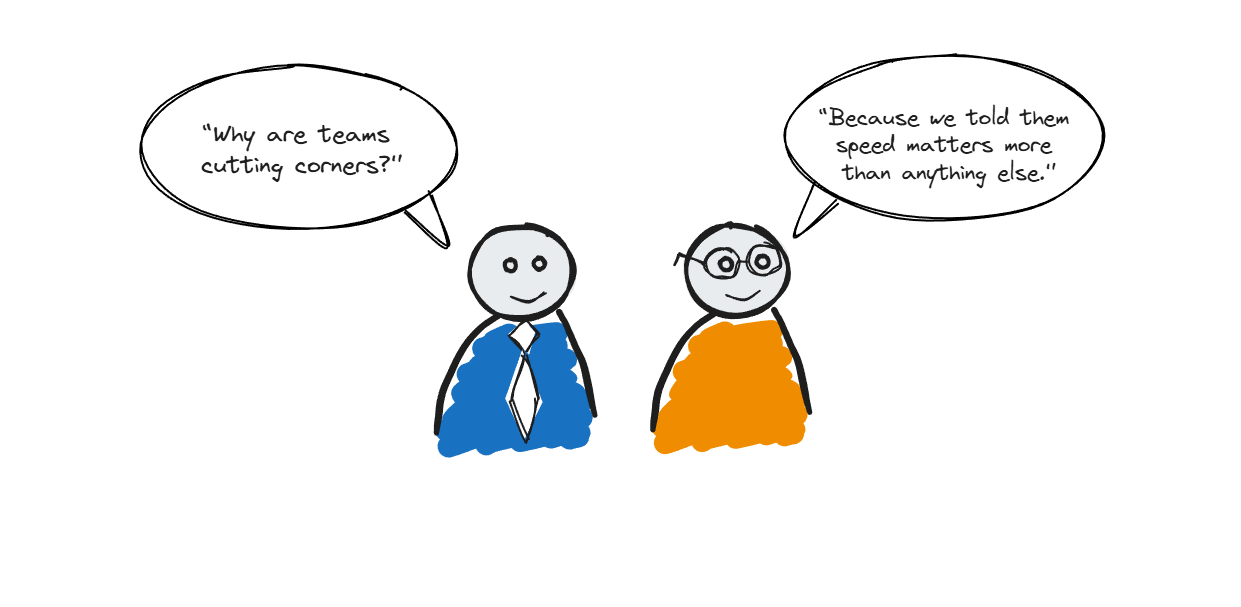
The organisation you get is the one you measure for
Every metric contains a theory about how value flows. If you measure velocity, you are assuming that more estimated output corresponds to more meaningful progress. If you measure utilisation, you are assuming that busyness equates to productivity. If you measure features shipped, you are assuming that output reliably translates to impact.
These assumptions are rarely made explicit, but they govern decisions. The theory embedded in the metric becomes the architecture of the organisation. So Goodhart’s Law is not about gaming the system; it’s about design.
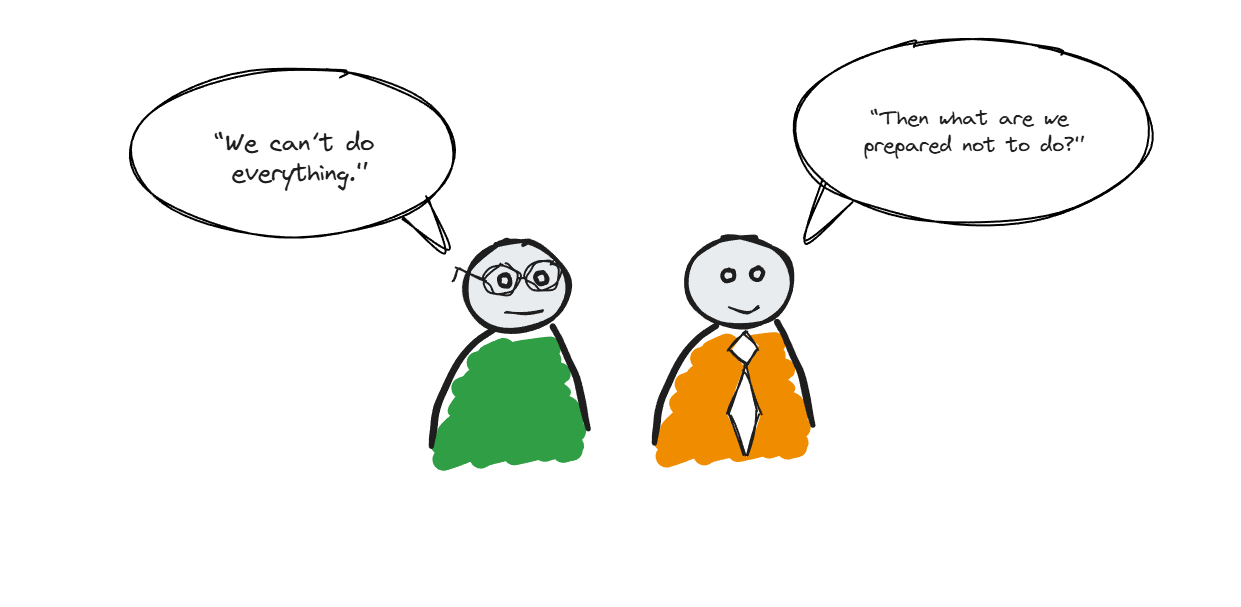
The moment a constraint becomes useful
When the conversation turns from “how do we eliminate this?” to “what is this forcing us to choose?” the dynamic shifts. The group begins to prioritise more honestly. Peripheral ambitions fall away. Trade-offs become explicit rather than implied.
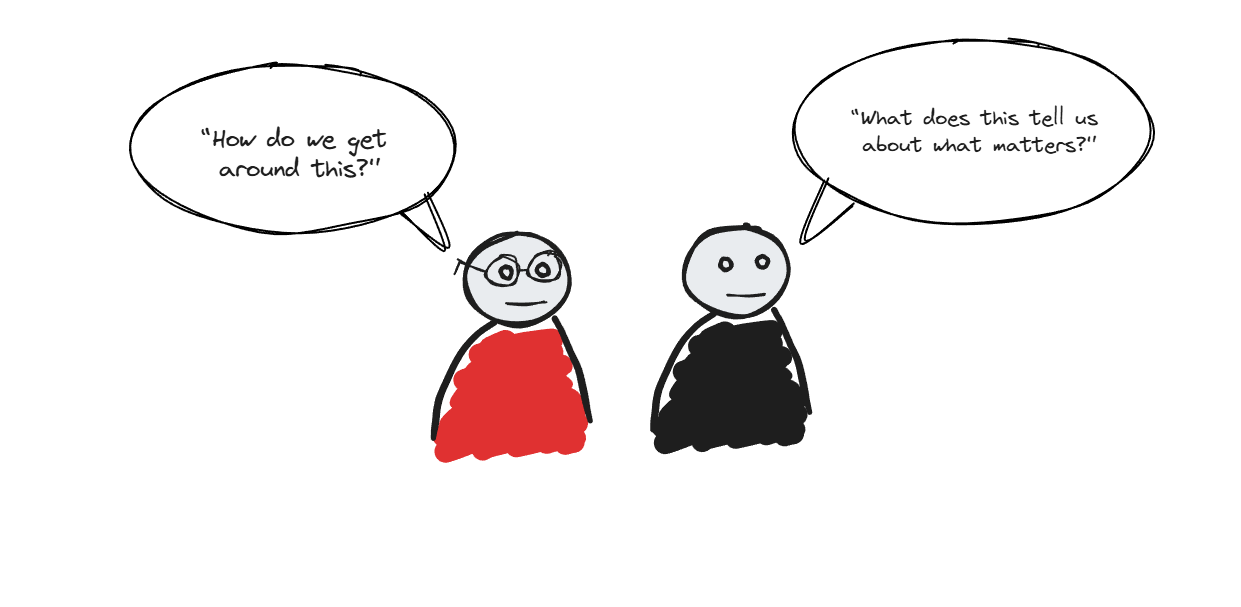
Using constraints to move from understanding to action
Instead of asking, “How do we work around this constraint?” Ask, “What does this constraint tell us about what matters?” That second question changes the conversation. It forces prioritisation, surfaces hidden preferences and exposes which initiatives are truly strategic and which are comfort projects.
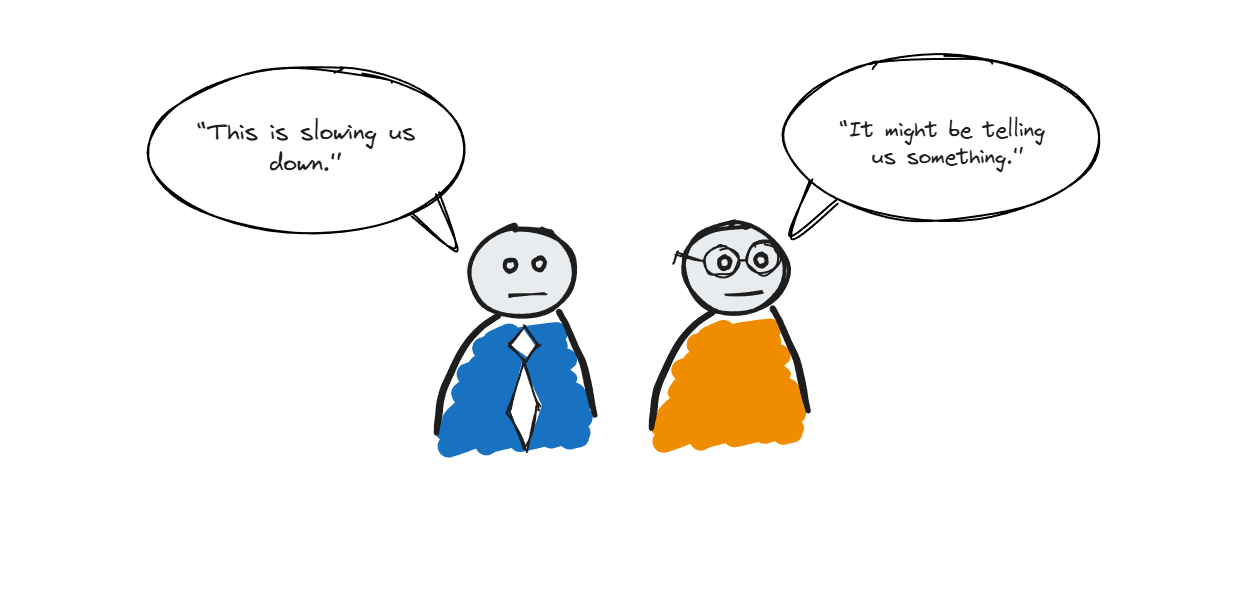
Constraints don’t just restrict, they clarify
Constraints don’t just restrict, they clarify. When considered carefully, they reveal what truly matters; expose assumptions about value that otherwise remain implicit and force prioritisation. The problem isn’t the presence of constraints, it’s how they’re interpreted.
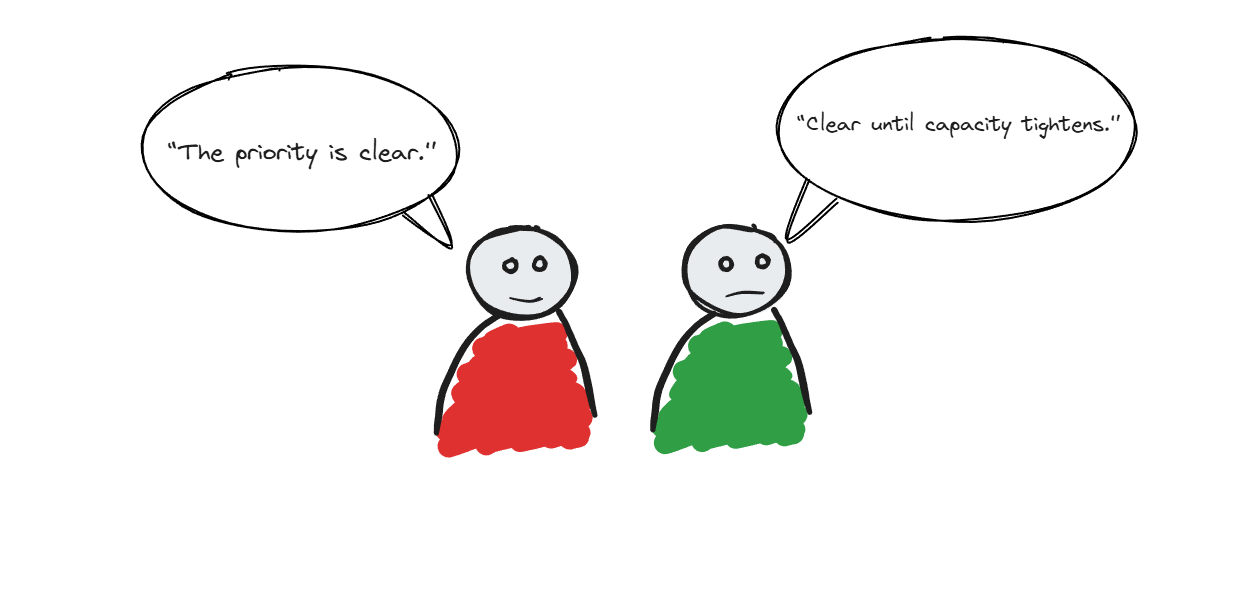
Why shared goals don’t produce shared decisions
Shared goals are often treated as the end state of alignment. If everyone agrees on what matters, the assumption is that the right decisions will naturally follow. What I tend to see is that goals hold only until they meet constraint. Capacity tightens, an urgent request appears, or two important initiatives compete for the same resource. In that moment, the goal itself rarely tells people what to do. It offers direction, but not judgment.
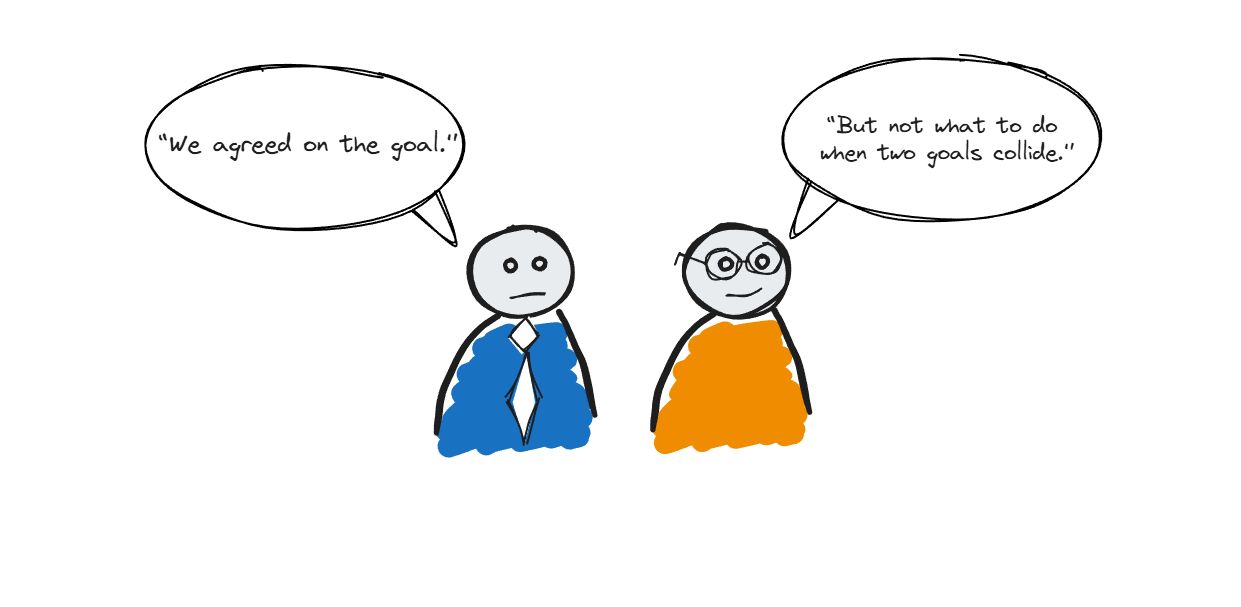
Agreement is not the same as alignment
Agreement tends to focus on what we want to achieve. Alignment becomes visible later, when people have to decide how to act under constraint — what to prioritise when capacity tightens, what to defer when two important things compete, and whose needs take precedence when compromise is required.